Garden Maintenance in Hounslow

Garden Maintenance Hounslow keeps domestic and small commercial outdoor spaces tidy, balanced and easier to manage through the seasons. Our work covers regular upkeep as well as one-off help when borders, lawns, hedges and general growth need attention. The aim is practical: to keep outside areas neat, healthy and presentable without unnecessary disruption. If you want a straightforward way to discuss the work, you can request a quotation once you have an idea of the space and the tasks involved.
We provide garden maintenance services that can be shaped around routine visits or occasional tidying, depending on the condition of the garden and the results you want to achieve. Typical maintenance may include cutting grass, trimming hedges, clearing light overgrowth, managing edging and keeping planted areas orderly. Where a garden has become uneven or difficult to look after, a planned programme of attention is usually more effective than a single quick visit, especially when different areas need work in a sensible order.
For customers comparing options, it helps to think in terms of outcome rather than just individual tasks. Some gardens need a simple refresh before a sale, tenancy change or family event; others benefit from steady seasonal care that keeps growth under control and improves the appearance of the whole plot. If you are unsure which tasks matter most, start with the areas that are causing the most visible problems and build the rest of the plan from there. Clear priorities make the quotation process easier.
Regular upkeep for lawns, borders and general tidying
Routine garden maintenance is usually the most effective way to keep an outdoor space looking orderly through changing weather and growth patterns. That work may include mowing, edging, light weeding, leaf clearing and trimming the parts of the garden that quickly lose shape. It also helps to keep paths, borders and access routes free from build-up so the space remains easy to use. A garden often looks far better when small tasks are handled consistently rather than left until they become more time-consuming.
Lawn mowing is often one of the most visible parts of this service, because a level cut can transform the feel of the whole garden. Alongside mowing, we can focus on tidy lines, sensible clippings management and clean edges where grass meets borders or paving. Lawns can vary a great deal in condition, so the work is not always only about cutting height; sometimes the better decision is to restore shape, remove uneven growth and make the space look cared for again.
Hedges, shrubs and controlled growth

Overgrown hedging and untidy shrub growth can change the look of a property very quickly. Careful trimming brings those plants back into proportion and helps the garden feel deliberate rather than unruly. The aim is not simply to remove length, but to preserve a clean shape, reduce visual heaviness and keep growth from spilling into paths, borders or neighbouring areas. In many gardens, a small amount of regular attention prevents larger cutting work later on.
Hedge trimming is especially useful when the boundary line has become uneven or when a hedge has started to obscure light and space. Different hedge types need different approaches, and the right finish depends on the plant, the season and the condition of the growth. We can also combine hedge care with other maintenance tasks so the rest of the garden does not look neglected beside freshly cut boundaries. That balance usually matters just as much as the hedge itself.
Where shrubs, climbers or mixed planting have become dense, maintenance work may involve selective cutting and the removal of awkward growth rather than a single repeated shape cut. This helps keep the planting healthier in appearance and reduces the risk of obvious hard edges that do not suit the garden. Good maintenance is often about restraint as much as reduction.
Clearance work for neglected or cluttered gardens
Some gardens need more than routine upkeep. When a space contains fallen material, thick weeds, excess cuttings or old garden waste, a clearance-focused visit can create a proper starting point for future maintenance. This kind of work is useful when a garden has been left for a while and the surfaces, planting and usable areas are no longer easy to see clearly. The purpose is to recover structure without making assumptions about the final design of the space.
Garden clearance is often chosen before maintenance begins in earnest, because a clearer site makes later trimming, mowing and border work more manageable. It can also help when a property is changing hands, after seasonal drop or when an outdoor area needs to be made safe and presentable. We work carefully through the site so the useful parts of the garden can be retained and the unwanted material removed in a sensible sequence.
In some cases, a clear-up is only the first step before longer-term care is arranged. That may involve setting out what should stay, what should be cut back and what needs regular attention to stop the same build-up happening again. The most practical plan is usually the one that makes the space workable first.
Shaping outdoor spaces with broader landscaping support
Although our main focus is garden maintenance, some customers also need help with small landscaping changes that make upkeep easier or improve the overall layout. That might include refreshing tired areas, improving planting structure or adjusting parts of the garden so the space feels more coherent and manageable. These tasks are especially useful when a garden has good basic potential but needs a cleaner framework before it can be maintained well.
Landscape gardening can sit alongside maintenance where the work needs a more planned approach than simple routine visits. It is often best suited to gardens that need rethinking in sections, whether the aim is to simplify care, reshape beds or improve the way different features sit together. The result should be a garden that is easier to look after and more comfortable to use, rather than one that depends on heavy intervention each season.
If you are weighing up whether your garden needs maintenance, clearance or something more structural, look first at the underlying issues. A planting area that keeps failing may need a different layout; a lawn that struggles because of shade or wear may need a more realistic finish; a boundary that blocks access may need reshaping before it can be maintained properly. That kind of judgement keeps the work focused and avoids unnecessary extras.
Decking and hard features that sit within the garden

Maintenance is not limited to plants. Decking, raised edges and other hard features often affect how tidy a garden looks and how easily it can be used. When these elements are cared for alongside the rest of the space, the result is more coherent. Even a well-kept lawn can feel unfinished if surrounding timber or built features are neglected, stained or overrun by growth. A balanced approach keeps the whole garden looking intentional.
Decking services can be relevant where timber features need renewing or where a garden would benefit from a cleaner, more usable surface. Depending on the condition of the existing area, work may involve replacement, improvement or the adjustment of surrounding details so the deck sits more naturally in the layout. In practical terms, that can make routine garden maintenance simpler because edges, access and transitions are better defined.
Hard landscaping and soft garden care often work best together. A newly cut lawn looks sharper beside a tidy deck; trimmed hedges frame paths more neatly; cleared borders make structural features stand out in the right way. If different parts of the garden are tackled separately, they should still be planned as one space so the finish remains consistent. That keeps the outdoor area usable without making any one part look overdone.
Tree work and heavier vegetation control
Some gardens require attention to trees or larger woody growth before the smaller maintenance work can really make an impact. Overly dominant branches, unwanted shade, blocked light and awkward overhangs can all affect the way a garden functions. Where that is the case, heavier vegetation control may be part of the wider maintenance plan, especially if the space has become difficult to manage from the ground up.
Tree lopping and removal is a more specific service than ordinary tidying, and it is best considered when branches, trunks or larger growth are creating practical problems. The right approach depends on the tree, its condition and what needs to be achieved around it. In some gardens, partial reduction is enough; in others, the issue is that a tree no longer suits the space and needs to be removed so the rest of the garden can recover.
Heavier cutting work should always be connected to the rest of the site, not treated as an isolated task. A tree that casts excessive shade may change how lawn care is done; branches that hang low may shape hedge work and border access; fallen material may add to clearance needs. Bringing those strands together helps the garden return to a manageable condition more quickly and with less repetition.
Service planning, access and quotation details
Before maintenance begins, it is useful to identify the main priorities, the size of the space and any areas that are difficult to reach. A clear description of the garden usually helps to establish whether the work is routine upkeep, a larger tidy-up or a combination of different tasks. Photos can help as well, especially when the garden has uneven levels, dense planting or sections that are hard to describe accurately. The more practical the information, the easier it is to shape a sensible scope.
If the work is likely to involve several visits or a mix of services, it is worth noting which parts of the garden matter most to you. For example, one customer may want the lawn and hedges handled first, while another may need general clearance before anything else can be assessed. Pricing and quotes should reflect the actual tasks involved, and that is why it helps to be specific about access, current condition and the finish you are hoping to achieve.
Useful details to have ready:
- the approximate size of the garden or the main areas that need attention
- whether the work is a one-off tidy-up or ongoing maintenance
- which features matter most, such as lawns, hedges, borders or hard surfaces
- any access issues, heavy growth or waste that may affect the job
Safety, waste handling and responsible garden care
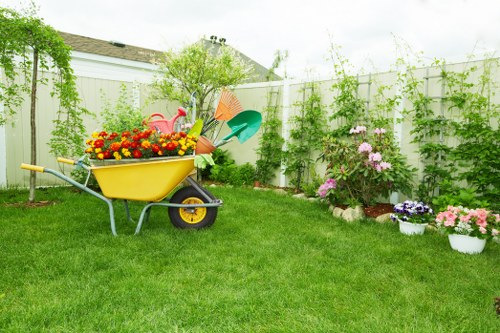
Good garden maintenance also depends on how the work is carried out. Tools, cut material and site access all need to be handled with care so the space is left orderly and so the process stays efficient. Where large quantities of clippings, prunings or clearance material are involved, it is important that the work plan includes sensible handling from the start. That avoids clutter building up while the garden is being improved.
Recycling and sustainability can be relevant where green waste and reusable material are being managed responsibly. Not every job produces the same type or volume of waste, but it is still sensible to think about what can be processed, removed or separated in a practical way. That approach supports a cleaner finish and reduces the chance that cleared material is simply moved from one part of the site to another without purpose.
If a garden contains awkward access, heavy debris or mixed material, the work may need to be paced so that the most obstructive sections are handled first. This can be especially helpful in older gardens or spaces that have not been maintained regularly. The main aim is to leave the site tidy, workable and ready for either ongoing care or any further improvement the customer has in mind.
About Hounslow
Hounslow is a large district in west London with a long history as a settlement on the route west from the city. Its identity has been shaped by movement, trade and later suburban growth, and it sits within the London Borough of Hounslow. The area includes a mix of older streets, post-war development and busy transport corridors, giving it a varied character rather than a single uniform centre. Hounslow High Street remains one of the best-known focal points, reflecting the commercial role the district has played for many years. Not far away, the surrounding neighbourhoods show different layers of London development, from more established residential streets to newer retail and transport-linked areas. The borough’s wider geography also reaches towards open spaces, parks and stretches close to the River Crane, which helps balance the urban density with pockets of greenery. Hounslow Heath is one of the most notable landscapes in the district, remembered for its historic role as a common and later valued as open land within the modern borough. The area is also strongly connected to transport, especially through Hounslow Central, Hounslow East and Hounslow West on the Piccadilly line, as well as road links that make it a busy and accessible part of west London. Together these features give Hounslow a practical, lived-in character: commercial in places, residential in others, and shaped by the movement of people, goods and services over time.
Ongoing garden care and the next step
Once the main work has been completed, many gardens benefit from a simple maintenance rhythm that keeps the finish in good order. That might mean regular mowing through the growing season, hedge attention at the right intervals, seasonal clearing and selective tidying of areas that quickly lose shape. The important thing is to match the schedule to the garden rather than forcing everything into the same pattern. A small, well-timed visit can sometimes preserve a much better result than a larger but less frequent intervention.
Garden maintenance can cover a broad range of tasks, but it is usually most effective when the scope is clear from the outset. Whether the priority is a lawn that needs reclaiming, hedging that has outgrown its space or a general tidy-up after a period of neglect, the work should be set out in a way that makes sense for the site. That makes it easier to decide what to do now and what can wait until later.
If you are ready to discuss the garden, contact us for a quotation and tell us which areas need attention first. You do not need to map out every detail before starting the conversation; a practical overview is enough to begin. If you are still comparing options, return to the main service pages and choose the combination that best suits the condition of the garden and the finish you want to achieve.